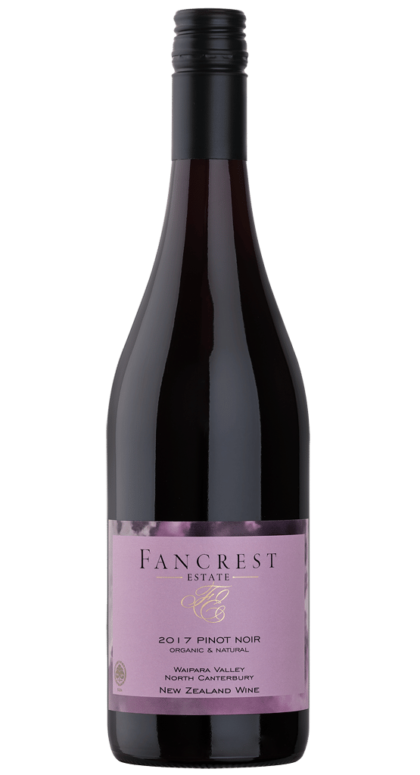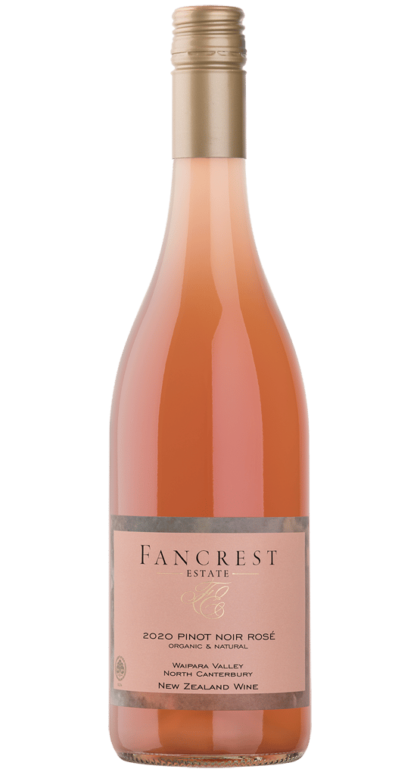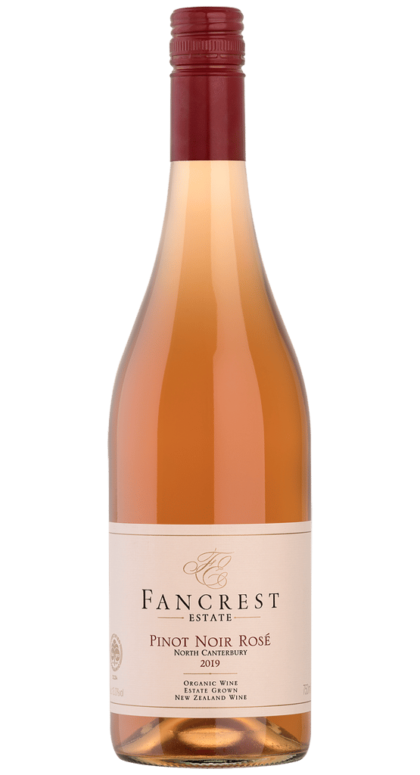

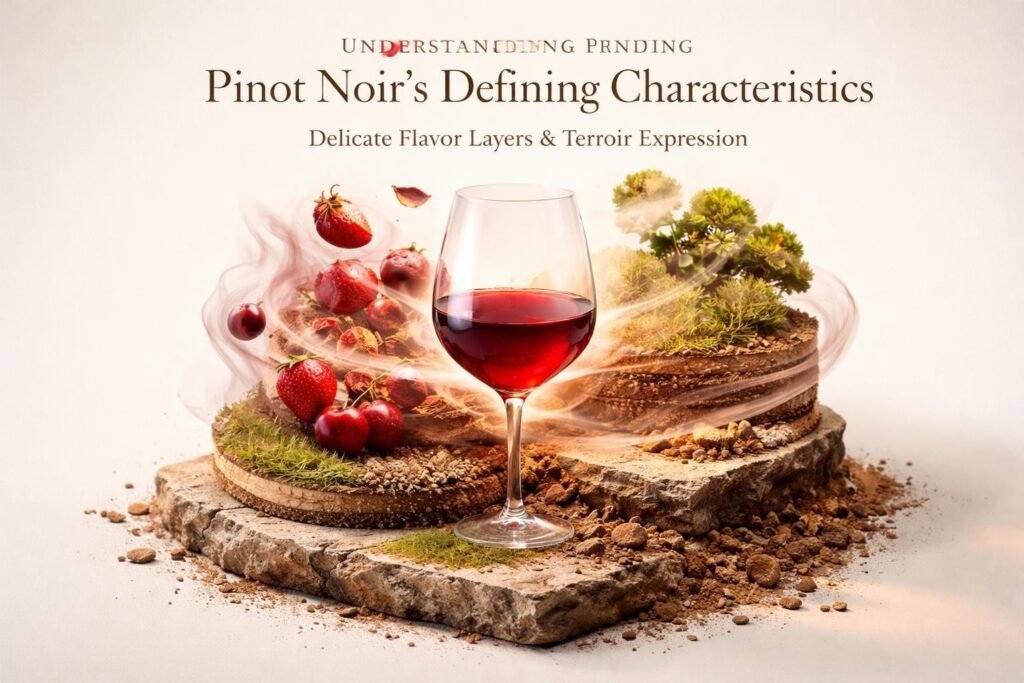
You've probably heard Pinot Noir described as the heartbreak grape, the diva of wine grapes, or the holy grail of winemaking. But what does a proper pinot noir description actually tell you about what's in your glass? This elegant red wine has captivated wine lovers for centuries, and once you understand its characteristics, you'll know why. Whether you're exploring wine for the first time or deepening your appreciation, understanding Pinot Noir helps you choose wines that genuinely match your palate.
What Makes Pinot Noir Unique
Pinot Noir stands apart from other red wines in almost every way.
The grape itself is notoriously difficult to grow. It has thin skins that make it vulnerable to disease, rot, and weather fluctuations. This fragility translates directly into what you taste.
Unlike bold, tannic reds like Cabernet Sauvignon, Pinot Noir offers something more subtle. It's lighter in body but incredibly complex in flavor. The thin skins mean less tannin extraction, giving you a silkier, more approachable wine.
Pinot Noir's history stretches back over a thousand years to Burgundy, France. That heritage matters because it shaped how winemakers worldwide approach this grape today.
The Essential Pinot Noir Description: Color and Appearance
Pour a glass of Pinot Noir and you'll immediately notice it looks different from other reds.
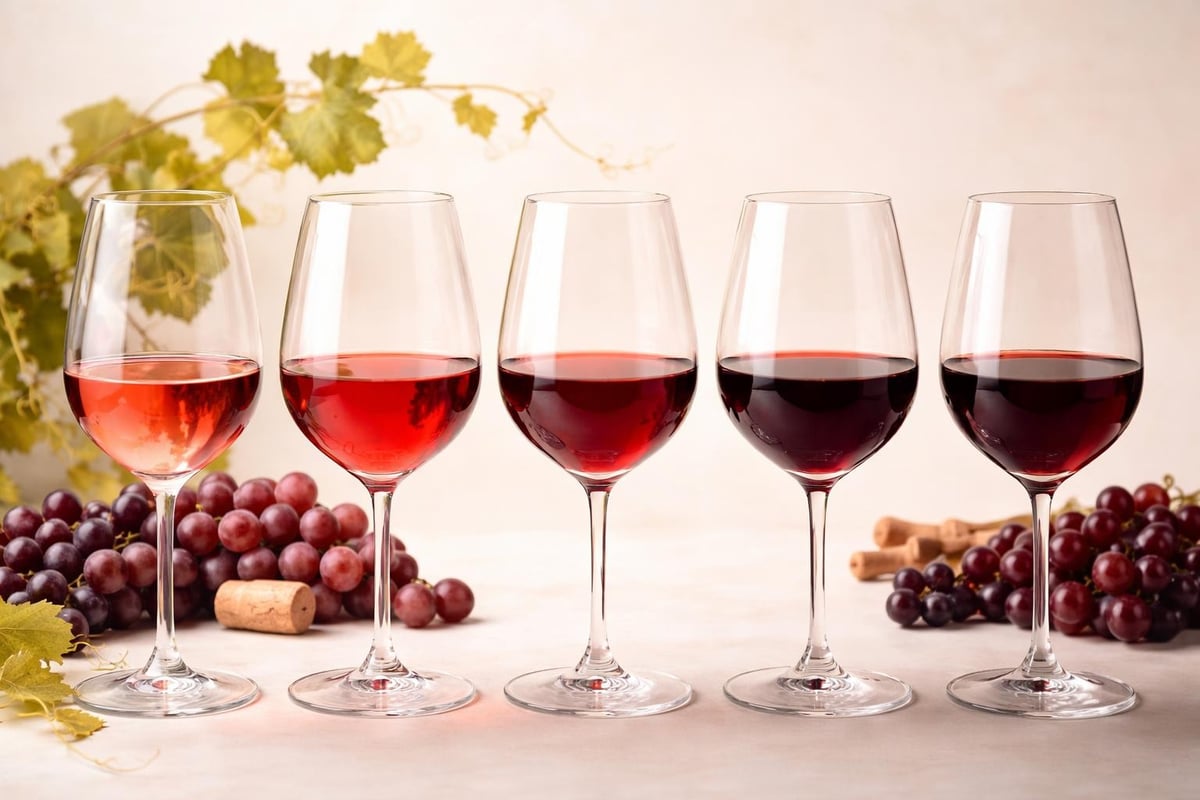
The color ranges from pale ruby to deep garnet. Young Pinot Noir often shows bright cherry or cranberry hues. As it ages, it develops more brick or amber tones around the edges.
Hold your glass up to the light. You can often see through Pinot Noir more easily than darker reds. This transparency isn't a flaw but a hallmark of the grape's thin skins.
What the Color Tells You
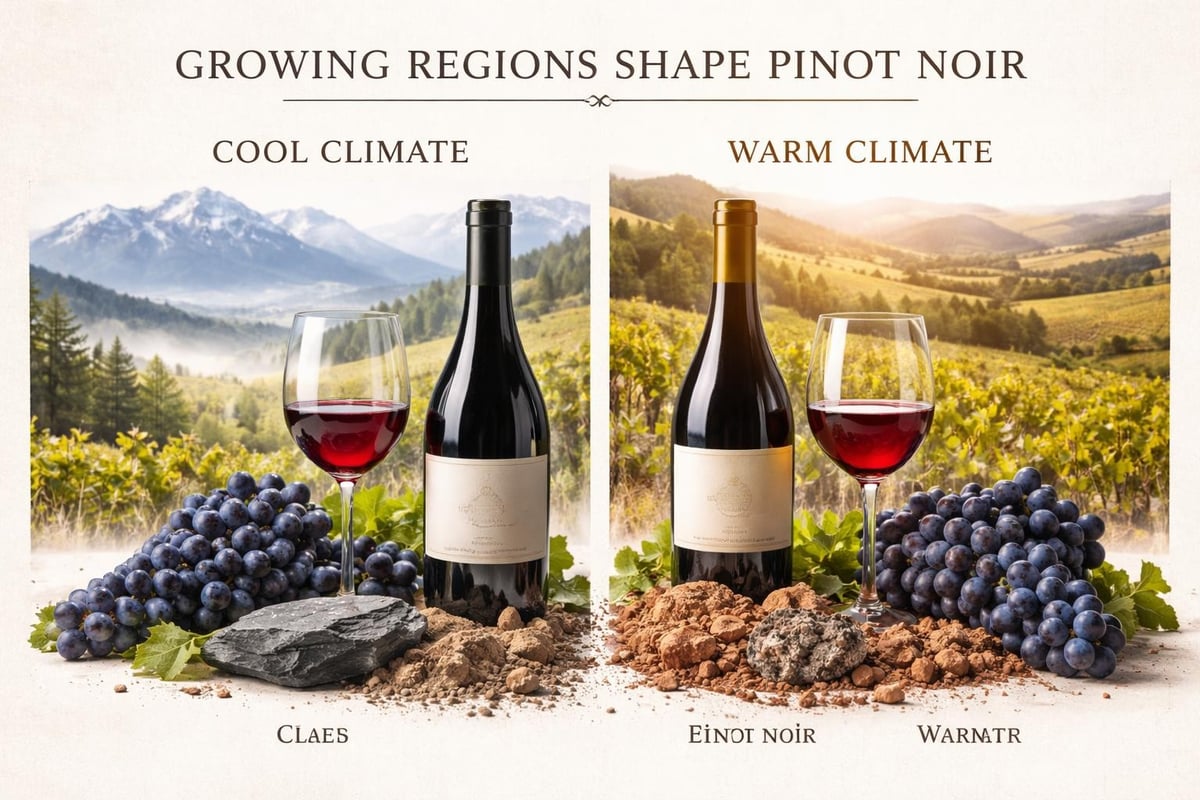
Lighter colors often indicate cooler climate origins. Darker versions might come from warmer regions or riper vintages.
The rim of your wine reveals age. A brownish edge suggests maturity and evolved flavors. A vibrant purple rim indicates youth and freshness.
Watch how the wine moves in your glass. Pinot Noir typically shows medium viscosity, creating elegant legs that slide down the glass at a moderate pace.
Aromatic Profile in a Pinot Noir Description
Stick your nose in a glass of quality Pinot Noir and prepare for complexity.
The primary aromas typically center on red fruits. Think cherry, raspberry, strawberry, and cranberry. These aren't jammy or cooked fruit notes but fresh, vibrant expressions.
Beyond fruit, you'll often detect earthy elements. Mushroom, forest floor, wet leaves, and truffle appear frequently. These aren't off-putting but add intriguing depth.
Many Pinot Noirs also show floral notes. Rose petals and violets emerge, especially in cooler climate examples. These delicate aromatics contribute to the wine's elegant character.
Secondary and Tertiary Aromas
As Pinot Noir ages, new dimensions develop.
Secondary aromas from winemaking include vanilla, toast, and spice from oak aging. But well-crafted examples balance these against the fruit rather than overwhelming it.
Tertiary aromas from bottle aging bring leather, tobacco, tea leaves, and dried cherries. These evolved characteristics add sophistication and drinking pleasure.
Some producers also work with natural vineyard yeasts, which can introduce subtle complexity beyond conventional winemaking. These nuanced layers reward careful attention.
Flavor Characteristics Every Pinot Noir Description Should Cover
Now take that first sip. What should you expect?
The flavor profile mirrors the aromatics but adds textural elements. Red fruit flavors dominate, particularly cherry and raspberry. Depending on ripeness and origin, you might also taste darker notes like plum or black cherry.
Acidity plays a crucial role in Pinot Noir's flavor profile. This brightness lifts the fruit and creates refreshing balance. It's what makes Pinot Noir so food-friendly and age-worthy.
Tannin Structure
Here's where Pinot Noir truly differs from bigger reds.
The tannins are soft and silky rather than gripping or astringent. They provide structure without dominating. This makes Pinot Noir approachable young yet capable of aging gracefully.
Quality examples show fine-grained tannins that integrate seamlessly. Lower quality versions might taste thin or hollow by comparison.
Body and Texture in Your Glass
Pinot Noir typically falls into the light-to-medium body category.
It doesn't coat your mouth like Shiraz or Malbec. Instead, it glides across your palate with elegance. This lighter body makes it remarkably versatile with food.
The texture should feel smooth and refined. Think silk rather than velvet. The best examples achieve what winemakers call "tension," where acidity, fruit, and tannin balance perfectly.
Alcohol levels usually range from 12.5% to 14.5%. Higher alcohol can add weight and warmth, while lower alcohol maintains freshness and purity.
Regional Variations That Shape Every Pinot Noir Description
Where Pinot Noir grows profoundly impacts its character.
Burgundy, France remains the benchmark. These wines show exceptional elegance, minerality, and aging potential. They often command premium prices for good reason.
Cool Climate Expressions
New Zealand produces distinctive Pinot Noir, particularly in regions like Central Otago, Martinborough, and Waipara.
Waipara in North Canterbury offers unique conditions for organic viticulture. The region's limestone soils, moderate temperatures, and natural drainage create ideal conditions for expressing Pinot Noir's delicate nature.
Cool climate versions emphasize bright acidity, red fruit purity, and herbal notes. They're often more restrained and food-friendly than warmer climate examples.
| Region | Typical Characteristics | Body | Acidity |
|---|---|---|---|
| Burgundy, France | Earthy, mineral, red fruit | Light-Medium | High |
| Waipara, New Zealand | Pure fruit, vibrant, elegant | Medium | Medium-High |
| Central Otago, NZ | Ripe cherry, spice, intensity | Medium-Full | Medium |
| Oregon, USA | Red berries, cola, mushroom | Medium | Medium-High |
| California, USA | Riper fruit, fuller body | Medium-Full | Medium |
Warmer Climate Differences
California Pinot Noir, particularly from Russian River Valley and Santa Barbara, shows riper fruit and fuller body.
Oregon's Willamette Valley produces wines closer to the Burgundian style. These combine new world fruit with old world elegance.
Each region tells its own story through the wine. Understanding these differences helps you find expressions that match your preferences.
Organic and Natural Winemaking Influences
Modern pinot noir description must consider production methods.
Organic viticulture eliminates synthetic pesticides and fertilizers. This approach respects the vineyard ecosystem and often produces more expressive wines.
Natural vineyard yeasts allow indigenous fermentation rather than commercial yeast strains. This technique can add complexity and terroir expression that commercial yeasts mask.
Why Production Matters to Taste
Certified organic practices impact flavor in subtle but meaningful ways.
The wines often show clearer fruit definition. Without chemical residues interfering, the grape's natural character shines through more purely.
Hand-harvesting ensures only properly ripened fruit reaches the winery. This selection process directly affects the wine's balance and complexity.
Aging wines before release allows them to develop and integrate. Rather than rushing to market, patient winemakers let Pinot Noir express its full potential.
Food Pairing Guidance from Pinot Noir's Description
The wine's characteristics make it incredibly versatile at the table.
Pinot Noir's medium body and moderate tannins pair beautifully with a wide range of foods. You don't need heavy proteins to stand up to it.
Perfect Matches
- Salmon and fatty fish: The wine's acidity cuts through richness perfectly
- Duck and game birds: Classic pairings that highlight earthy notes
- Mushroom dishes: Natural bridge between wine and food
- Roasted chicken: Simple preparation lets the wine shine
- Charcuterie: Salt and fat balance Pinot's fruit and acidity
Cheese pairings work wonderfully too. Try aged Gruyère, Brie, or goat cheese.
Vegetarian dishes often pair better with Pinot Noir than heavier reds. Roasted vegetables, lentils, and pasta with cream sauces all work.
Understanding Quality Indicators
Not all Pinot Noir delivers the same experience.
Price often reflects quality, though exceptions exist. Premium examples show greater depth, length, and complexity.
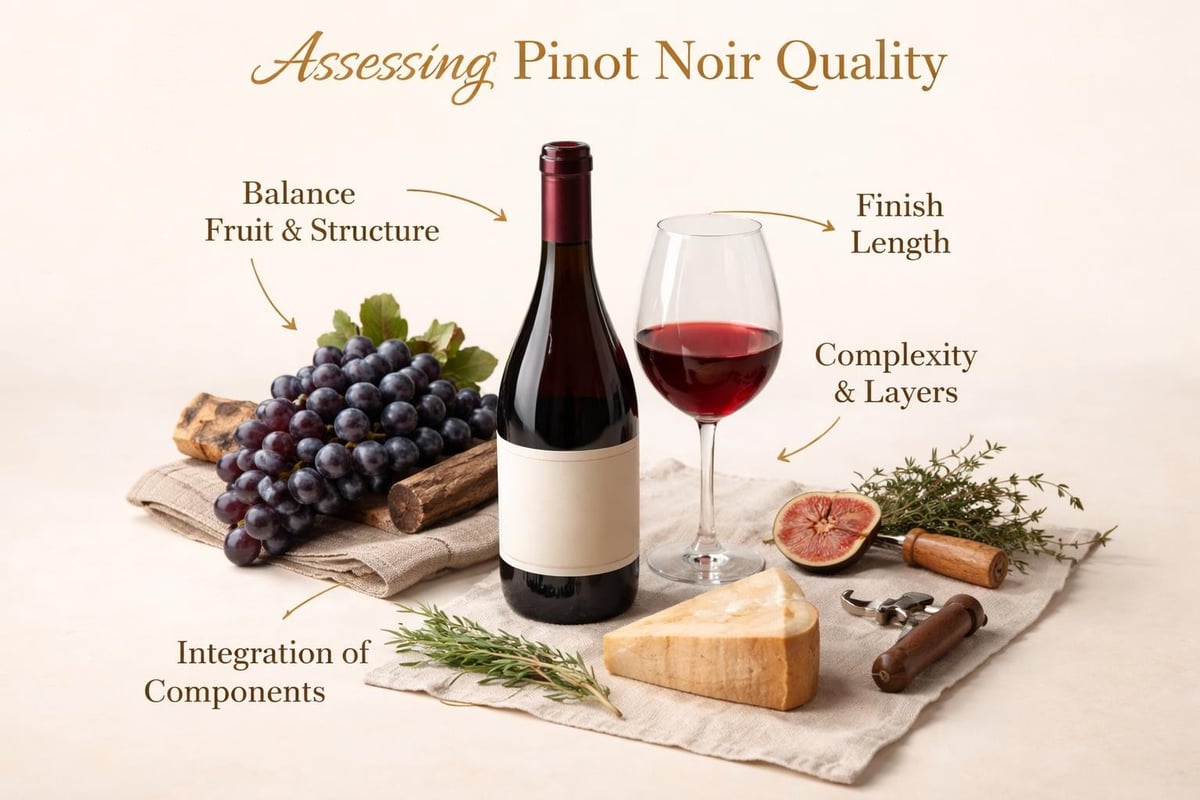
Look for wines that balance all elements. Fruit, acidity, tannin, and oak should integrate harmoniously rather than one dominating.
Key Quality Markers
Finish length indicates quality. Does the flavor persist for 30+ seconds after swallowing?
Complexity separates good from great. Can you identify multiple flavor and aroma layers?
Balance matters most. No single element should overpower the others.
Regional reputation provides guidance too. Established regions with proven track records often deliver more consistent quality.
Aging Potential in the Pinot Noir Description
Can you age Pinot Noir successfully? Absolutely.
Quality examples improve over 5-10 years, sometimes longer. The wine develops tertiary characteristics that add fascination.
However, not all Pinot Noir benefits from aging. Lighter, fruit-forward styles are best enjoyed young. More structured, concentrated wines reward patience.
What Happens During Aging
The bright red fruit evolves into dried cherry and cranberry. Earth and savory notes become more prominent. Tannins soften further, creating even silkier texture.
Color shifts from ruby toward garnet and brick. The wine becomes more transparent at the rim.
Proper storage matters enormously. Cool, dark, humid conditions with minimal temperature fluctuation preserve quality.
Many producers age their wines before release. This approach ensures you receive the wine when it's approaching its peak rather than needing years of cellar time.
Serving Temperature and Glassware
How you serve Pinot Noir affects what you taste.
Serve it slightly cooler than room temperature, around 55-60°F (13-16°C). Too warm and the alcohol dominates. Too cold and you suppress the aromatics.
Glass Selection
Use a large-bowled glass with a tapered rim. This shape concentrates the delicate aromatics toward your nose.
The Burgundy glass design works perfectly. Its wide bowl allows the wine to breathe while the narrow opening focuses the bouquet.
Pour moderately, filling the glass only one-third full. This leaves room for swirling and releases more aromatic compounds.
Let the wine breathe after opening. Thirty minutes of air exposure helps many Pinot Noirs open up.
The Rosé Expression
Pinot Noir's versatility extends beyond traditional reds.
Pinot Noir rosé offers a lighter, refreshing alternative. Made by limiting skin contact, these wines show strawberry, watermelon, and citrus notes.
The rosé style maintains the grape's elegance while offering brighter acidity and lower tannins. Perfect for warmer weather or lighter fare.
Some producers create exceptional rosés using the same careful organic practices they apply to their reds. These show surprising depth while remaining refreshing.
Common Misconceptions About Pinot Noir
Let's clear up some confusion around this wine.
Myth: Light color means weak flavor. Reality: Pinot Noir's pale hue doesn't indicate lack of intensity. The complexity exists in layers rather than power.
Myth: All Pinot Noir tastes the same. Reality: Regional variation creates enormous diversity within the variety.
Myth: Pinot Noir can't age. Reality: Quality examples age beautifully, developing fascinating complexity.
Understanding Value
Expensive doesn't always mean better. Small, family-owned estates often produce exceptional wines at fair prices because they control every step from vine to bottle.
Direct-to-consumer sales eliminate middleman markups. You get better wine for your money when buying straight from the producer.
Why Pinot Noir Captivates Wine Lovers
What makes people passionate about this grape?
The elegance factor ranks high. Pinot Noir doesn't overwhelm but invites contemplation. Each sip reveals something new.
It expresses place like few other varieties. The same clone grown in different soils produces distinctly different wines.
The Pursuit of Excellence
Pinot Noir challenges winemakers to achieve perfection. The grape's finicky nature means small details matter enormously.
For drinkers, this translates into wines that reward attention. You're not just consuming a beverage but experiencing craftsmanship.
The best examples achieve what seems impossible: power with elegance, complexity with purity, intensity with restraint.
Making Your Own Pinot Noir Description
Tasting wine actively rather than passively enhances enjoyment.
Start with appearance. Note the color, clarity, and viscosity.
Move to aromatics. Identify primary fruit notes first, then secondary and tertiary characteristics.
The Tasting Process
- Initial sip: Let the wine coat your palate before swallowing
- Mid-palate: Notice how flavors evolve and develop
- Finish: Pay attention to what lingers and for how long
- Integration: Consider how all elements work together
Take notes if you want to remember specific bottles. Recording your impressions helps refine your palate over time.
Compare different examples side by side when possible. This highlights regional and stylistic differences more clearly than tasting individually.
Seasonal Considerations for Pinot Noir
Different times of year call for different expressions.
Summer invites lighter, brighter versions. Serve them slightly cooler and pair with grilled salmon or vegetable dishes.
Autumn and winter suit more structured examples. These pair beautifully with heartier fare like duck or mushroom risotto.
Year-Round Versatility
Unlike heavy reds that feel overwhelming in warm weather, Pinot Noir works across seasons.
Its moderate alcohol and fresh acidity make it approachable anytime. You're never locked into drinking it only in certain conditions.
This versatility explains why so many people choose Pinot Noir as their go-to wine. It adapts to circumstances rather than demanding specific settings.
Understanding a complete pinot noir description helps you choose wines that genuinely match your preferences and occasions. The characteristics of lighter body, silky tannins, complex aromatics, and elegant fruit define this remarkable variety. If you're ready to experience hand-crafted, organic Pinot Noir that expresses its terroir with purity and elegance, Fancrest Estate offers premium examples aged to perfection and available for direct delivery. Their family-owned Waipara vineyard produces artisanal wines using certified organic practices and natural yeasts, creating expressions that stand proudly among the world's finest Pinot Noirs.