
Why Organic Vineyard Management Creates Better Wine
An organic vineyard operates as a living system rather than a production line.
Every element connects. Healthy soil feeds beneficial microorganisms. These microorganisms support vine roots. Strong roots produce balanced fruit. Balanced fruit becomes exceptional wine.
Research confirms what organic growers have known for years. Organic management produces higher quality wine grapes with increased concentrations of beneficial phenolic compounds and antioxidants. These compounds don't just offer health benefits. They create the complexity, depth, and character that wine lovers seek.
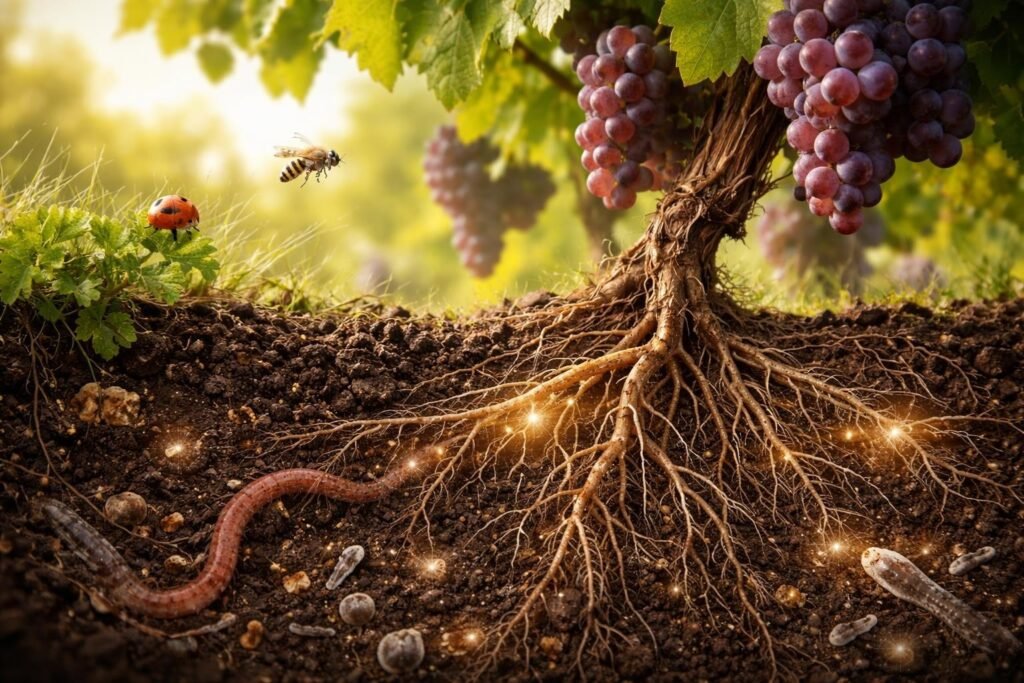
The difference starts underground. Conventional vineyards often rely on synthetic fertilizers that feed the plant directly. An organic vineyard builds the soil instead. Compost, cover crops, and natural amendments create a thriving underground community. This community includes fungi, bacteria, earthworms, and countless other organisms.
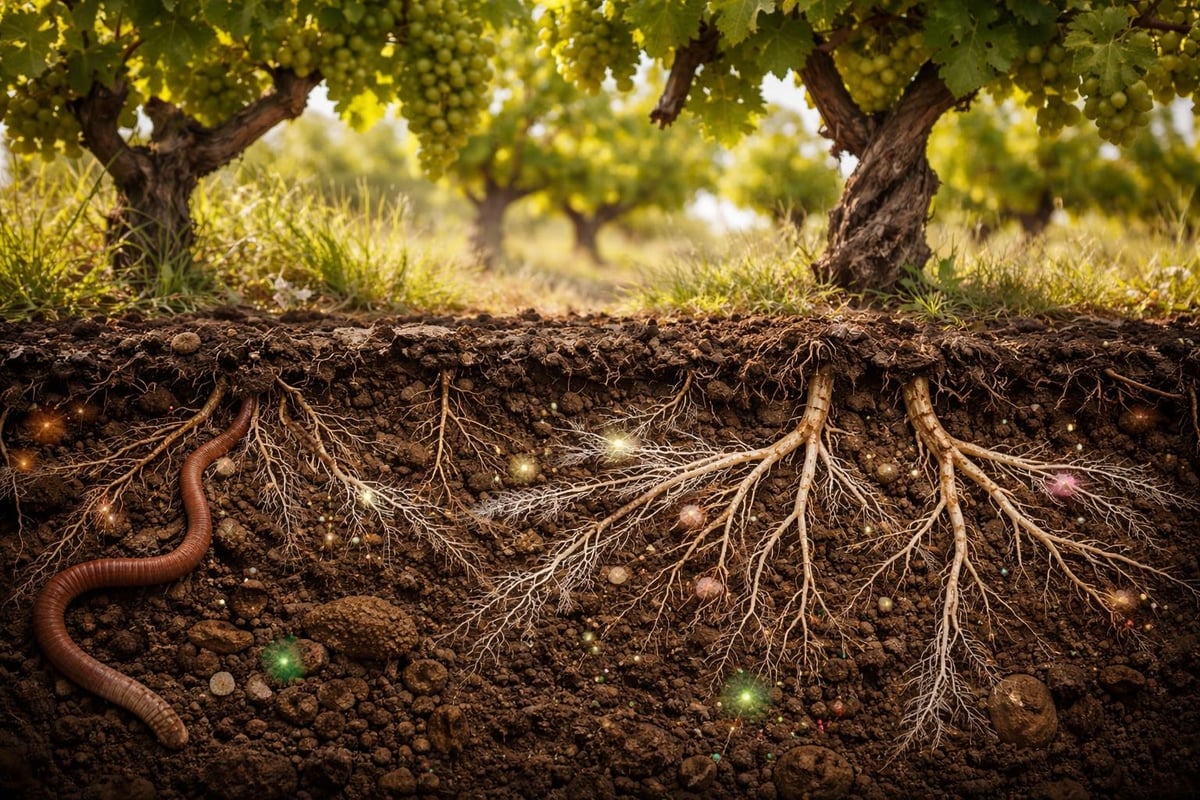
Each organism plays a role. Mycorrhizal fungi extend vine roots. Bacteria fix nitrogen. Earthworms aerate the soil. This living network delivers nutrients gradually, naturally, exactly when the vine needs them. The result? Grapes with better balance, more complex flavors, and true terroir expression.
The Hands-On Reality of Organic Viticulture
Running an organic vineyard demands constant attention.
You can't just spray a synthetic solution and walk away. Instead, you observe. You adjust. You respond to what the vineyard tells you.
Disease prevention happens through prevention, not reaction. Canopy management ensures airflow. Leaf removal lets sunlight reach the grapes. Timing matters enormously. Remove leaves too early, and you expose fruit to sunburn. Wait too long, and you risk fungal pressure.
Here's what a typical season involves:
- Spring: Monitor bud break, assess winter damage, plant cover crops
- Early Summer: Manage canopy growth, thin fruit if needed, watch weather patterns
- Mid-Summer: Continue canopy work, monitor for pests, prepare for véraison
- Late Summer: Final fruit assessment, begin harvest planning
- Autumn: Hand-harvest at optimal ripeness, begin soil preparation
- Winter: Prune vines, apply compost, plan for next season
Each task requires judgment. You're not following a predetermined schedule. You're reading the vineyard and responding accordingly.
Living Soil Creates Vibrant Wines
The foundation of any organic vineyard lies beneath your feet.
Living soil transforms viticulture from agriculture into ecology. The difference becomes obvious when you dig. Conventional vineyard soil might look uniform, compacted, lifeless. Organic vineyard soil teems with activity. It crumbles in your hand. It smells earthy and rich. It's dark with organic matter.
| Soil Component | Role in Vineyard Health | Impact on Wine Quality |
|---|---|---|
| Beneficial Bacteria | Nitrogen fixation, nutrient cycling | Enhanced aromatic complexity |
| Mycorrhizal Fungi | Extended root system, water uptake | Improved mineral expression |
| Earthworms | Soil aeration, organic matter breakdown | Better vine balance, consistent ripening |
| Organic Matter | Water retention, nutrient storage | Stress resistance, flavor concentration |
This living community doesn't just feed the vine. It communicates with it. When stressed, vines release chemical signals. Soil organisms respond. Some produce compounds that help the vine cope. Others attract beneficial insects that control pests. This constant dialogue shapes how grapes develop.
Biodiversity Above Ground Matters Too
An organic vineyard supports far more than grapevines.
Research on Mediterranean vineyards demonstrates how organic management with increased vegetation cover promotes beneficial insect abundance and diversity. These insects aren't just nice to have. They're functional. They pollinate cover crops. They prey on pests. They contribute to nutrient cycling.
Walk through different vineyard management styles and you'll notice the contrast immediately. Conventional vineyards often look sterile. Bare soil stretches between vine rows. Few flowers bloom. Bird songs are scarce.
An organic vineyard hums. Flowering plants attract pollinators. Native grasses provide habitat. Hedgerows offer shelter for beneficial predators. This biodiversity creates natural pest control. Ladybugs eat aphids. Lacewings consume mites. Parasitic wasps control leafhopper populations.
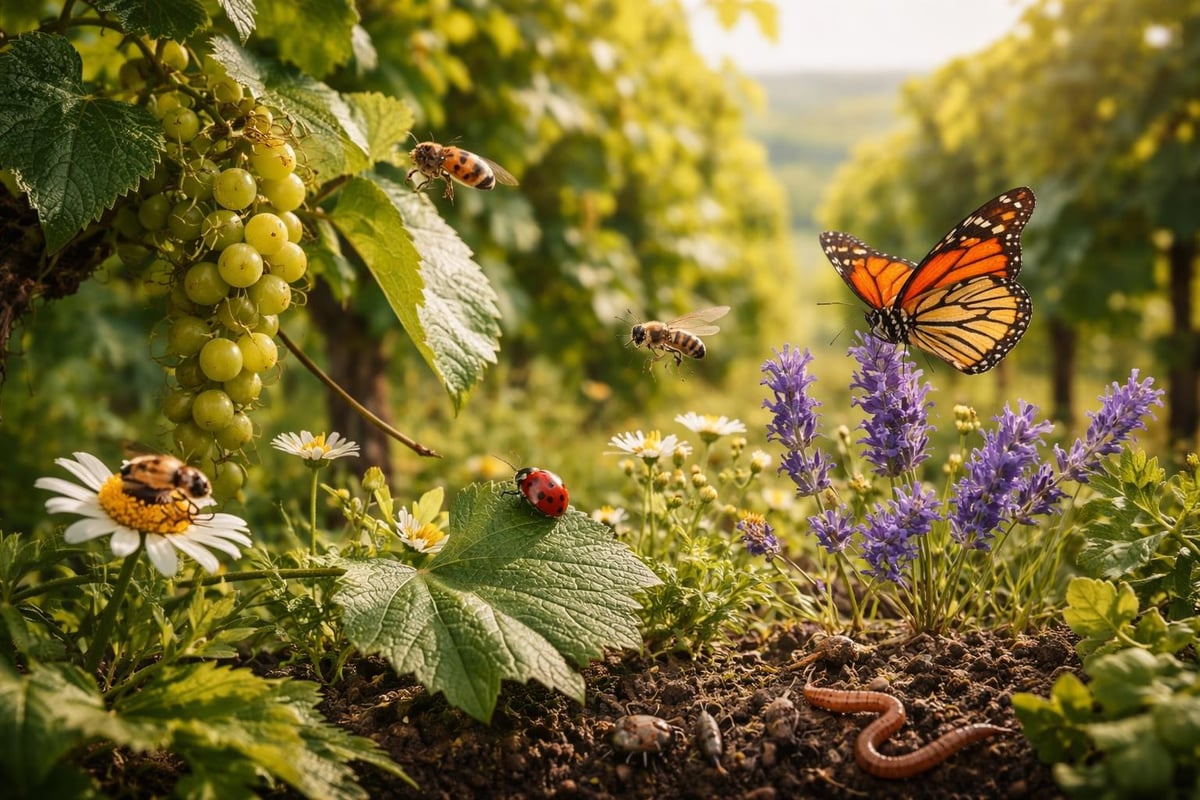
The benefits extend beyond pest management. Global research on vineyard biodiversity shows how extensive organic management and semi-natural habitats enhance multiple ecosystem services. These include pollination, soil formation, water regulation, and carbon sequestration. Your wine choice supports all of this.
Wild Yeasts: The Soul of Artisanal Winemaking
Here's where organic vineyard management truly diverges from conventional approaches.
Wild yeasts live everywhere in a healthy vineyard. They colonize grape skins. They inhabit cellar walls. They float in the air. Each strain contributes unique