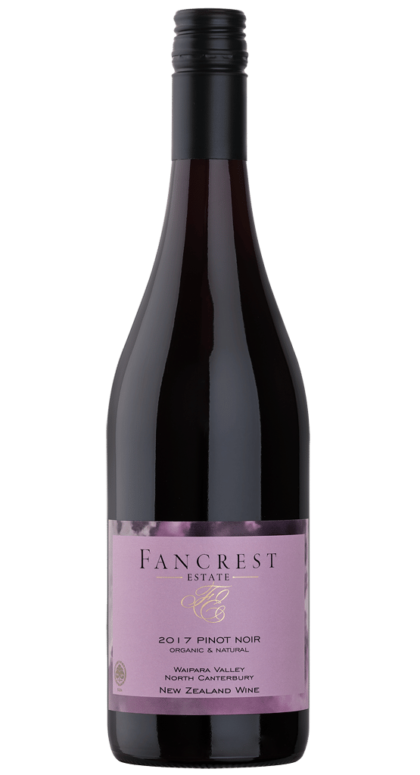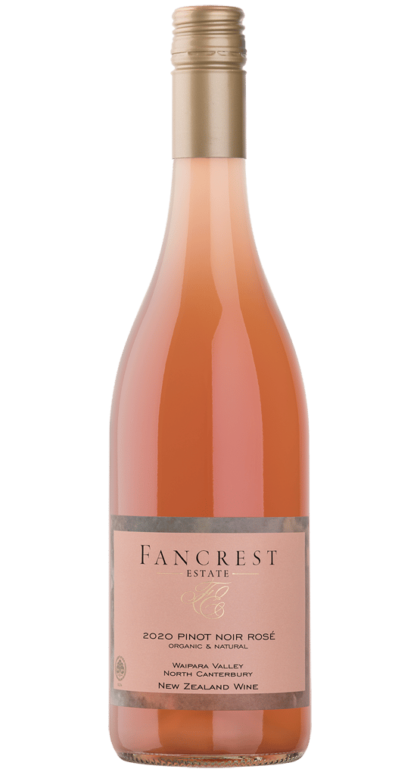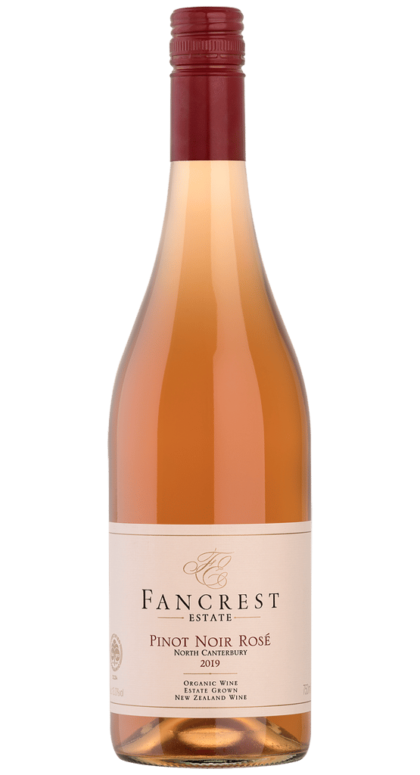

There's something magnetic about Pinot Noir that captures wine lovers worldwide. The way this temperamental grape transforms from vine to bottle tells a story of patience, craft, and connection to place. When you love Pinot Noir, you're embracing one of the world's most expressive wines, a variety that speaks directly of the soil it grows in and the hands that tend it. In New Zealand's Waipara Valley, where cool nights and warm days create ideal growing conditions, small family estates are proving that artisanal, organic approaches reveal the true character of this remarkable grape.
Why Wine Lovers Gravitate Toward Pinot Noir
The Pinot Noir grape has earned its reputation as the heartbreak grape.
It demands more attention than almost any other variety. It refuses to thrive in just any climate or soil.
Yet those who love Pinot Noir understand that this difficulty creates something extraordinary. The grape's thin skin makes it vulnerable but also gives wines their characteristic silky texture.
The Living Character of Great Pinot
When you hold a glass of well-crafted Pinot Noir, you're experiencing a living product.
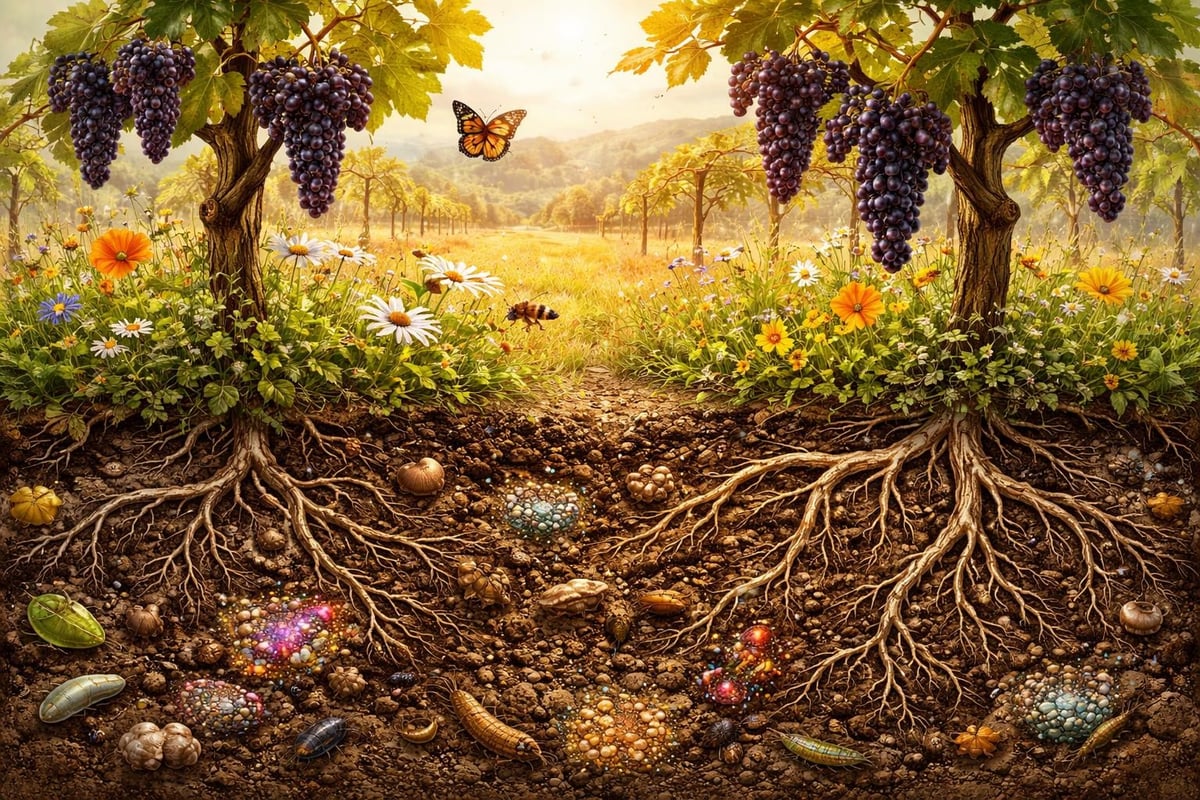
The wine contains millions of microbial stories. Wild yeasts from the vineyard have transformed grape sugars into alcohol and complex flavors.
Bacteria from the soil have contributed their own subtle notes. Even after bottling, the wine continues evolving, developing new aromatic compounds as it ages.
This isn't a manufactured commodity. It's agriculture captured in liquid form.
Flavor Profiles That Tell Stories
Those who love Pinot Noir often describe a journey with each sip.
You might notice cherry and raspberry at first. Then earthier notes emerge, reminiscent of forest floor or mushrooms.
The flavor characteristics of Pinot Noir vary dramatically depending on where and how it's grown. Cool climate versions tend toward elegance and restraint.
Warmer sites produce riper, more generous wines. But the best examples all share a certain transparency, letting you taste the place they came from.
The Artisanal Approach to Growing Pinot Noir
Small-batch winemaking operates on completely different principles than industrial production.
You're not managing thousands of hectares with machines and standardized inputs. You're walking through your vineyard daily, observing each row, sometimes each individual vine.
Hands-On Vineyard Management
Artisanal growers know their vines personally.
They notice when a particular section needs more canopy management. They can see stress developing before it becomes serious.
During harvest, they might pick different blocks on different days, even different times of day, to capture optimal ripeness. This level of attention simply isn't possible at large scale.
The vineyard becomes an extension of the winemaker's senses. You develop an intuition about what each season demands.
Organic Practices Create Complexity
Certified organic viticulture means working with nature rather than against it.
You're building soil health through composting and cover crops. You're encouraging beneficial insects instead of eliminating all bugs with pesticides.
Key benefits of organic Pinot Noir production:
- Soil teems with earthworms, fungi, and bacteria that enhance vine nutrition
- Natural predators control pest populations without chemical intervention
- Vines develop deeper root systems seeking nutrients organically
- Grapes express true terroir without synthetic flavor masking
- Wine captures authentic vintage variation rather than engineered consistency
The vineyard becomes a balanced ecosystem. Birds hunt insects among the vines. Soil microorganisms break down organic matter, creating nutrients in forms vines can absorb.
This biological activity translates directly into wine complexity. You can taste the difference between grapes grown in living soil versus chemically maintained ground.
Wild Fermentation and Natural Winemaking
Industrial wineries add laboratory-cultured yeasts to ensure predictable fermentation.
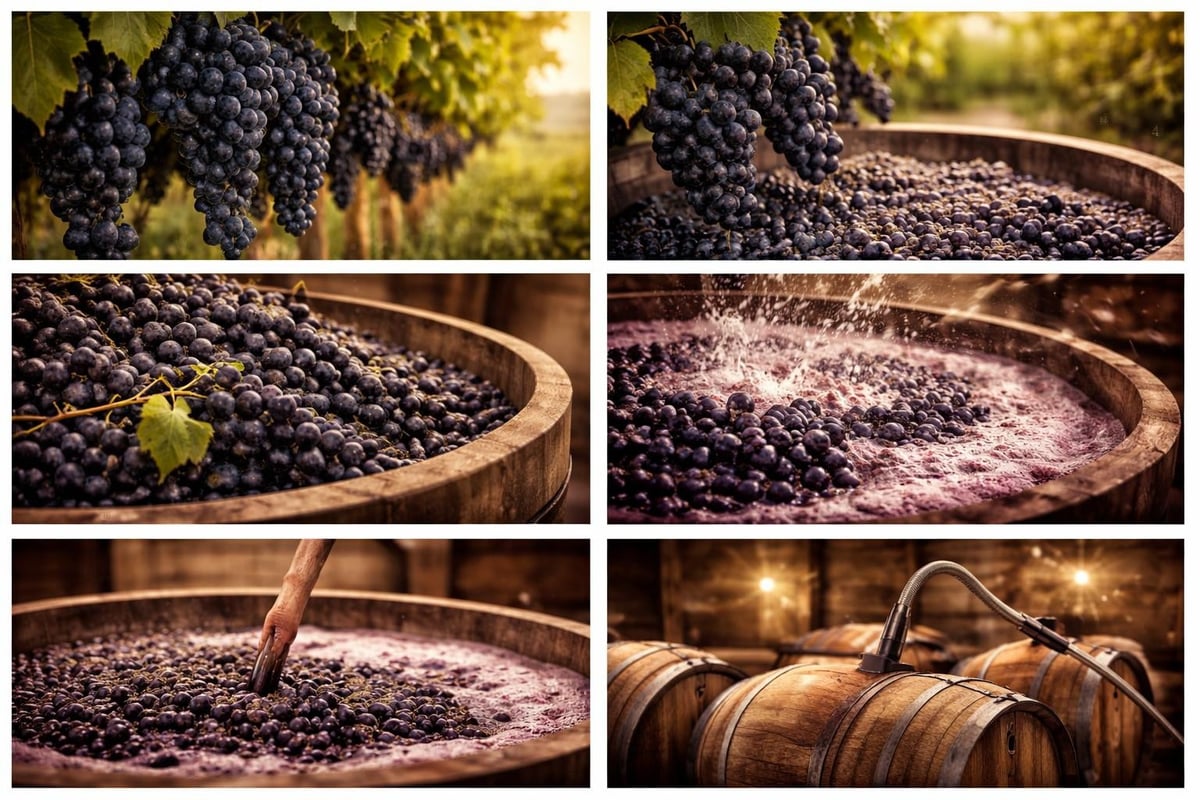
Artisanal producers take a different path. They allow native yeasts from the vineyard itself to drive fermentation.
The Community of Wild Yeasts
Your vineyard hosts hundreds of different yeast strains.
They live on grape skins, on vine bark, even floating in the air. Each strain contributes different aromatic and flavor compounds during fermentation.
When you love Pinot Noir made with wild yeasts, you're tasting your specific place. These yeasts are unique to your site, part of what makes your wine impossible to replicate elsewhere.
The fermentation takes longer, sometimes weeks instead of days. It proceeds in stages as different yeast populations take turns.
This creates layers of complexity no single cultured strain can match.
Minimal Intervention Philosophy
Artisanal winemakers view their role as stewards, not manufacturers.
You're guiding a natural process rather than forcing a predetermined outcome. This means fewer additions, less manipulation, more patience.
| Traditional Approach | Artisanal Method |
|---|---|
| Add commercial yeasts | Use wild vineyard yeasts |
| Adjust acid levels | Accept natural acidity |
| Fine heavily for clarity | Allow natural settling |
| Filter multiple times | Minimal or no filtration |
| Release immediately | Age before release |
The wine develops at its own pace. You might age it longer before release, waiting for tannins to soften naturally rather than using processing shortcuts.
This patience honors the living nature of wine. You're allowing all those microbial transformations to complete their work.
What Makes New Zealand Pinot Special
New Zealand has emerged as one of the world's premier Pinot Noir regions.
The country's cool maritime climate provides ideal conditions. Long growing seasons allow slow flavor development while maintaining natural acidity.
Waipara's Unique Terroir
North Canterbury's Waipara Valley offers something exceptional for Pinot Noir.
The region sits in a rain shadow created by coastal ranges. This means lower rainfall during crucial ripening periods.
Warm nor'west winds flow down from the mountains, creating significant day-night temperature variation. Grapes develop intense flavors during warm days while cool nights preserve acidity.
The soil types vary from limestone to clay, giving winemakers diverse vineyard sites to work with. Each block can express different characteristics.
The New Zealand Difference
Kiwi Pinot Noir has carved out its own identity globally.
It sits stylistically between the elegance of Burgundy and the fruit-forwardness of California. You get purity of fruit expression combined with earthy complexity.
The relatively young wine industry here means fewer entrenched traditions. Winemakers feel free to experiment, to follow their instincts.
Many operations remain small and family-owned. This scale allows the personal touch that separates artisanal wines from mass-market products.
The Health Benefits That Attract Attention
Beyond taste, those who love Pinot Noir often appreciate its potential health properties.
Pinot Noir contains higher levels of resveratrol than many other red wines. This compound has attracted significant research attention.
Why Pinot Noir Stands Out
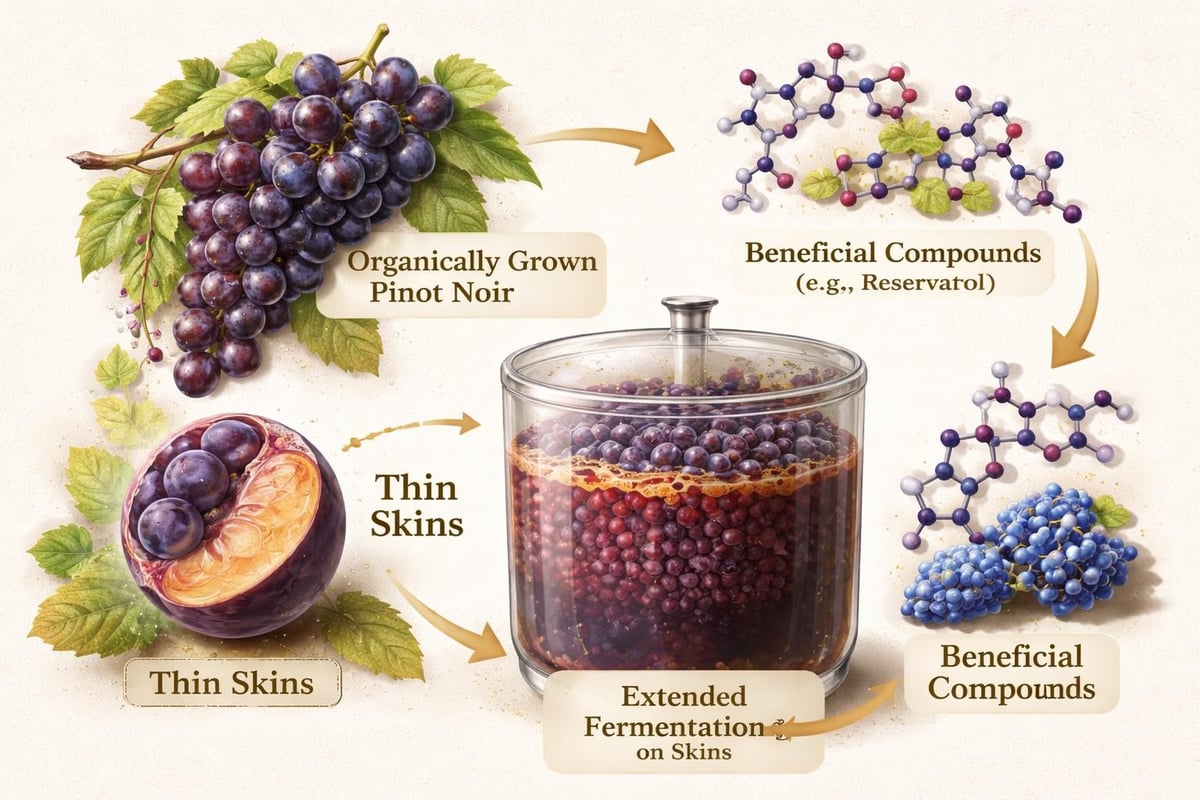
The thin skins that make Pinot challenging to grow also affect its chemistry.
Winemakers typically include more skin contact during fermentation to extract adequate color and tannin. This extended contact also extracts more beneficial compounds.
Organic production may enhance these benefits. Grapes grown without synthetic pesticides potentially contain higher levels of natural defensive compounds.
Potential wellness aspects:
- Higher resveratrol content compared to thicker-skinned varieties
- Moderate alcohol levels in many cool-climate examples
- Rich antioxidant profile from extended skin contact
- Minimal additives in naturally made versions
Of course, moderation remains key. The potential benefits come from occasional consumption, not excess.
From Vineyard to Bottle: The Artisan's Journey
Small-batch production means every decision affects the final wine.
You're not operating on a scale where small variations disappear into large blends. Each choice you make leaves its fingerprint.
Hand Harvesting Makes a Difference
Machine harvesters work quickly but can't distinguish ripe from unripe fruit.
Human hands can. When you harvest by hand, you're making decisions bunch by bunch, sometimes berry by berry.
You can leave slightly underripe clusters for another day. You can exclude fruit damaged by birds or weather.
This selectivity ensures only the best grapes enter your fermentation vessels. Quality starts in the vineyard, but hand harvesting is where quality control truly begins.
Barrel Aging Develops Character
After fermentation completes, the wine moves to barrels.
French oak remains the traditional choice for Pinot Noir. The wood allows gentle oxygen exchange while contributing subtle vanilla and spice notes.
Artisanal producers carefully select their barrels. You might use a mix of new and used oak to balance wood influence with fruit expression.
The wine rests here for months or even years. During this time, harsh tannins polymerize and soften. Flavors integrate and develop complexity.
Aging Before Release
Many small producers hold their wines longer before releasing them to market.
This costs money in terms of storage and tied-up capital. But it serves the wine and ultimately serves you, the customer.
You receive a wine that's already developed past its awkward youth. The different elements have had time to harmonize.
This is another way artisanal producers prioritize quality over quick turnover. The wine comes to you when it's genuinely ready to enjoy.
Pairing and Enjoying Pinot Noir
When you love Pinot Noir, you discover its remarkable versatility with food.
The wine's moderate tannins and bright acidity make it remarkably food-friendly. It doesn't overpower delicate dishes the way bigger reds can.
Classic Combinations
Pinot Noir traditionally pairs beautifully with duck, salmon, and mushroom dishes.
The wine's earthy notes complement fungi perfectly. Its acidity cuts through the richness of fatty fish.
Excellent pairing categories:
- Roasted poultry including chicken, duck, and game birds
- Salmon, tuna, and other fatty fish preparations
- Mushroom-based dishes from risotto to simple sautés
- Pork in various preparations from roasts to charcuterie
- Soft, creamy cheeses like brie and camembert
You can also enjoy quality Pinot Noir on its own. The complexity and balance make it satisfying without food.
Serving Considerations
Temperature matters more than many people realize.
Pinot Noir shows best slightly cooler than room temperature, around 14-16°C. Too warm and the alcohol becomes prominent. Too cold and the aromas shut down.
Let the wine breathe. Even young Pinot benefits from 30 minutes of air exposure before serving.
Use good glasses with a generous bowl. The wine's subtle aromatics need room to develop and concentrate.
Supporting Small-Scale Wine Artisans
When you buy from small, family-owned estates, you're supporting a different kind of agriculture.
You're voting for biodiversity over monoculture. For patient craftsmanship over industrial efficiency.
Direct Purchase Benefits Everyone
Many artisanal wineries sell directly to consumers online.
This cuts out distributor and retailer markups. You pay less while the winemaker receives more.
Direct relationships also allow the winemaker to share their story. You learn about the vintage conditions, the harvest decisions, the winemaking philosophy.
This connection transforms wine from a commodity into something personal. You know whose hands tended the vines and guided the fermentation.
The Value of Transparency
Small producers can offer complete transparency about their practices.
They'll tell you exactly which yeasts fermented the wine (or that they were wild). They'll explain their organic certification and what it means in practice.
You're buying from someone who knows every detail of the wine's creation. This accountability ensures integrity from soil to bottle.
Building Your Appreciation Over Time
Those who love Pinot Noir often describe it as a gateway to deeper wine appreciation.
The variety's transparency makes it an excellent teacher. You can taste differences between vintages, vineyards, and winemaking approaches.
Start with Quality Examples
Beginning your Pinot journey with mass-market versions can mislead you.
Industrial examples often taste generically fruity without much complexity. They might give you the wrong impression of what Pinot can be.
Start instead with wines from dedicated small producers. Even if they cost more initially, they'll show you what makes Pinot special.
Explore Different Expressions
Once you've found producers you trust, try different offerings.
Many estates produce several Pinot Noirs from different vineyard blocks. Tasting these side by side reveals how site affects the wine.
Try wines from different years to understand vintage variation. In organic, minimal-intervention winemaking, each year expresses itself honestly.
This exploration deepens your appreciation for the variety's complexity and the winemaker's skill.
When you love Pinot Noir, you're embracing wine at its most expressive and alive. The variety rewards patience, careful attention, and respect for natural processes from soil microbes to wild yeasts.
Fancrest Estate brings this artisanal philosophy to life in Waipara's exceptional terroir, crafting certified organic Pinot Noir wines using natural vineyard yeasts and hand-crafted methods that honor the living character of the grape. Experience the difference that small-batch, family-owned winemaking makes when quality and sustainability guide every decision from vine to bottle.